
Diamonds Rain Down Through the Atmospheres of Jupiter and Saturn
Scientists have calculated that diamonds literally rain down through the deep atmospheres of Jupiter and Saturn. Lightning storms in these gas giants break down methane molecules into carbon, which under extreme pressure and temperature transforms into graphite and then diamonds that fall for thousands of kilometers before eventually melting in the planets' cores.
More detail
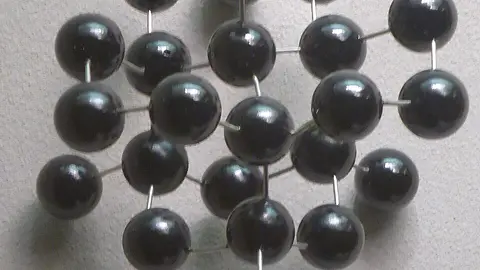
The atmospheres of gas giants are far more extreme than anything on Earth. Lightning storms in Jupiter and Saturn generate powerful electrical discharges that break methane (CH4) into elemental carbon and hydrogen through spark dissociation. The resulting carbon particles form 'carbon rain' that descends into progressively deeper atmospheric layers. At depths of about 1,000 miles (1,600 kilometers), the increasing pressure transforms amorphous carbon into graphite—the same material in pencils. As these graphite particles continue falling another 5,000 kilometers deeper, the pressure and temperature intensify further, converting graphite into diamond. These diamonds are estimated to be centimeter-sized—large enough to set into a ring. Saturn appears particularly favorable for diamond formation, with a stable diamond layer extending over 30,000 kilometers—about 2.5 Earth-diameters. Scientists estimate that approximately 1,000 tonnes of diamonds are created annually in Saturn's atmosphere alone. Eventually, these diamonds descend to depths where temperatures exceed 8,000 Kelvin, melting them into liquid carbon. This process makes diamond rain potentially the most common form of precipitation in the solar system by volume.



Comments 0
No comments yet. Be the first!
Sign in to leave a comment.