
Glass is technically a liquid not a solid
Glass, while appearing solid, is technically a supercooled liquid or amorphous solid. Its molecular structure lacks the crystalline lattice arrangement that defines crystalline solids.
More detail
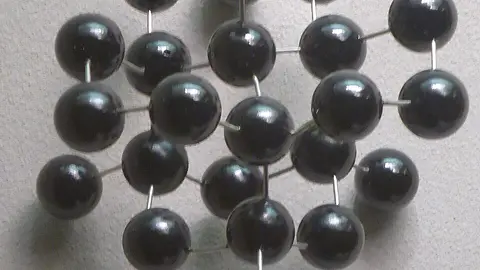
Glass presents a fascinating ambiguity at solids and liquids boundary. Glass is technically classified as a supercooled liquid or amorphous solid rather than true solid, despite appearing and behaving solidly. The distinction lies in molecular structure: crystalline solids like metals have regularly repeating three-dimensional atom lattice patterns. Glass has randomly arranged atoms without long-range order—similar to liquids, but with movement essentially frozen by extremely high viscosity. This structure makes glass technically liquid, albeit extremely viscous. Some describe glass as 'frozen liquid' or 'liquid in solid state.' The distinction has practical implications: while glass behaves solidly (supporting weight, maintaining shape), it retains liquid-like molecular properties. An often-repeated claim that medieval cathedral windows flowed thicker at the bottom is actually false—glass doesn't flow at room temperature; its viscosity too high. However, at extremely high manufacturing temperatures, glass truly behaves as liquid.







Comments 0
No comments yet. Be the first!
Sign in to leave a comment.