
Cats Purr Without Their Brains Telling Them To
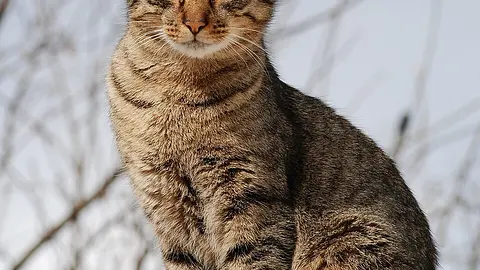
Scientists long assumed cats actively contracted their laryngeal muscles around 30 times per second to produce a purr — a feat requiring constant brain input. A 2023 study proved otherwise: cat larynges removed from the body and supplied with air alone continued to purr spontaneously, with no neural input at all.
More detail
The mechanism behind cat purring has puzzled scientists for decades. Cats are small animals, yet they produce low-frequency vocalizations — typically between 20 and 30 hertz — that are usually only associated with much larger animals. The prevailing explanation since the 1970s was the "active muscle contraction hypothesis": the idea that cats consciously contract and relax their laryngeal muscles roughly 30 times per second to sustain a purr. A 2023 study in the journal Current Biology overturned this. Voice scientist Christian Herbst and colleagues removed the larynges from eight domestic cats that had been euthanized due to terminal illness and pumped warm, humidified air through the detached tissue. Every single larynx produced self-sustaining oscillations between 25 and 30 Hz — without any muscles firing, without any input from the brain. The key appears to be unusual fibrous pads embedded within the cats' vocal cords, previously noticed by anatomists but never understood. These pads increase the density of the vocal cords, allowing them to vibrate at low frequencies despite the cat's small size — similar in principle to the vocal fry effect in human speech. Purring, the study concludes, is likely a passive phenomenon that begins when the brain provides an initial signal but then sustains itself automatically.
Comments 0
No comments yet. Be the first!
Sign in to leave a comment.